

Antique Alsatian Terracotta Easter Lamb Cake Mold, Early 20th Century - 6¾"x 11¾"
All inclusive pricing to USA
The price includes shipping, insurance and import costs. No more to pay for destinations within the US.
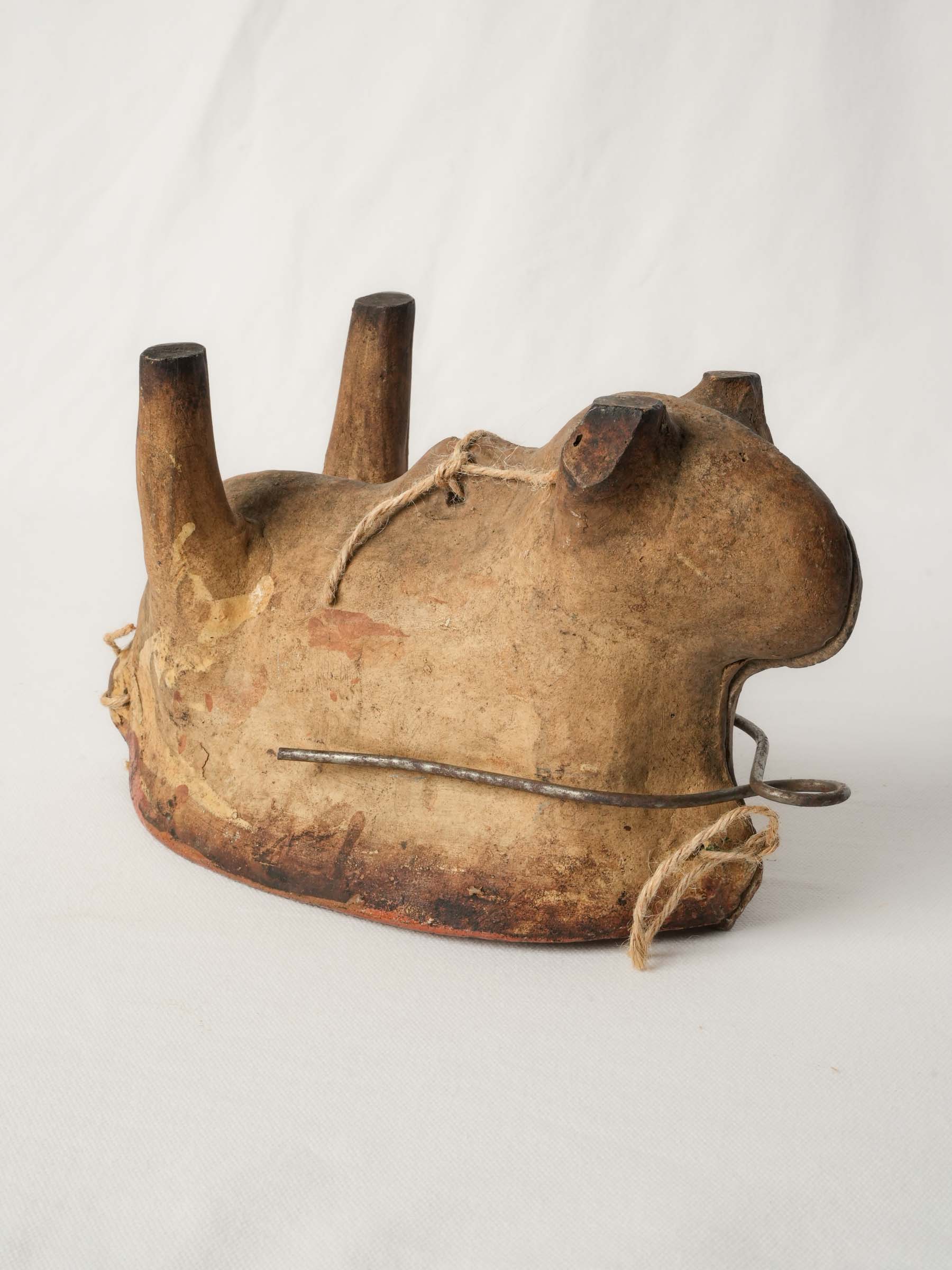
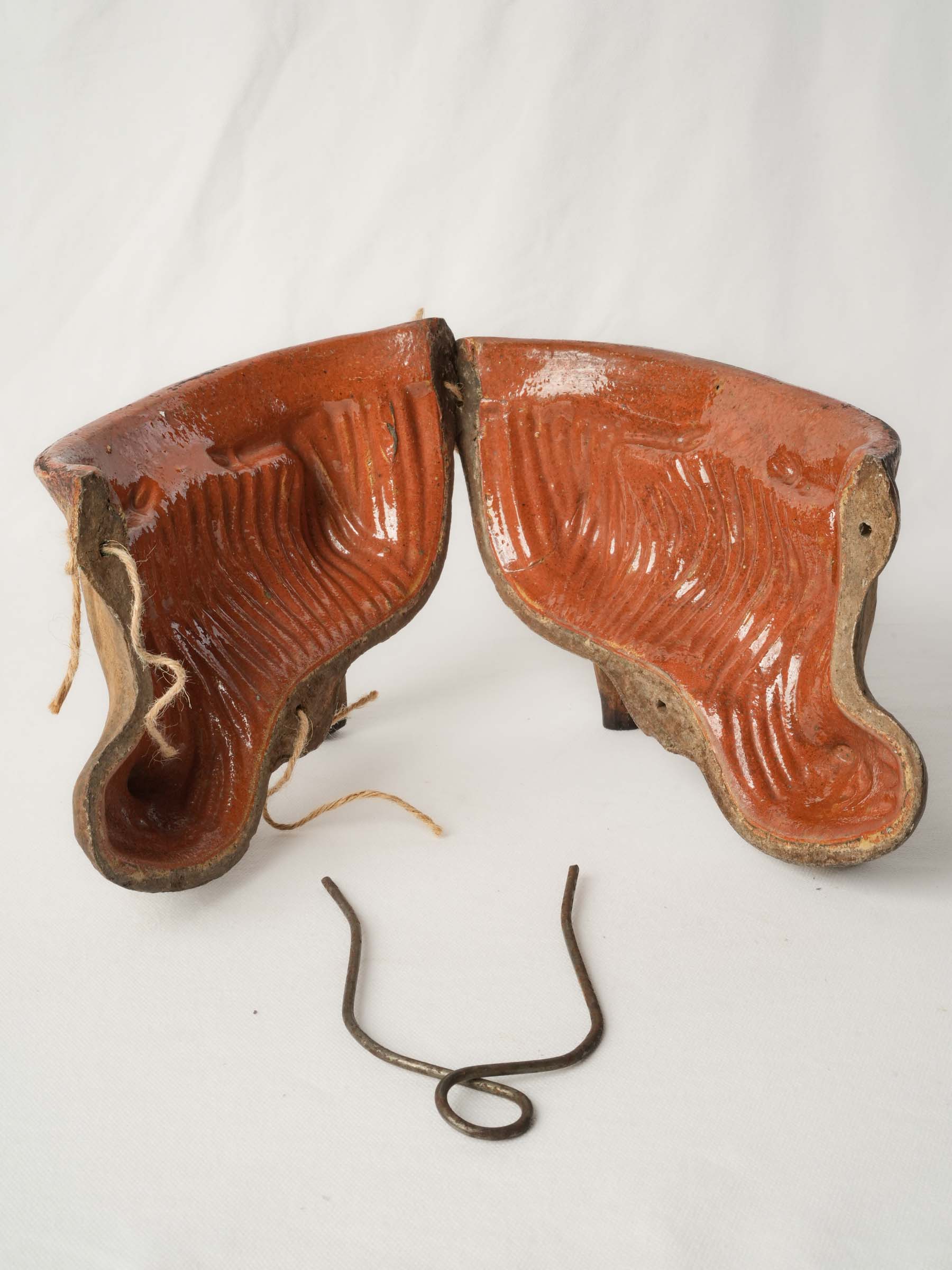
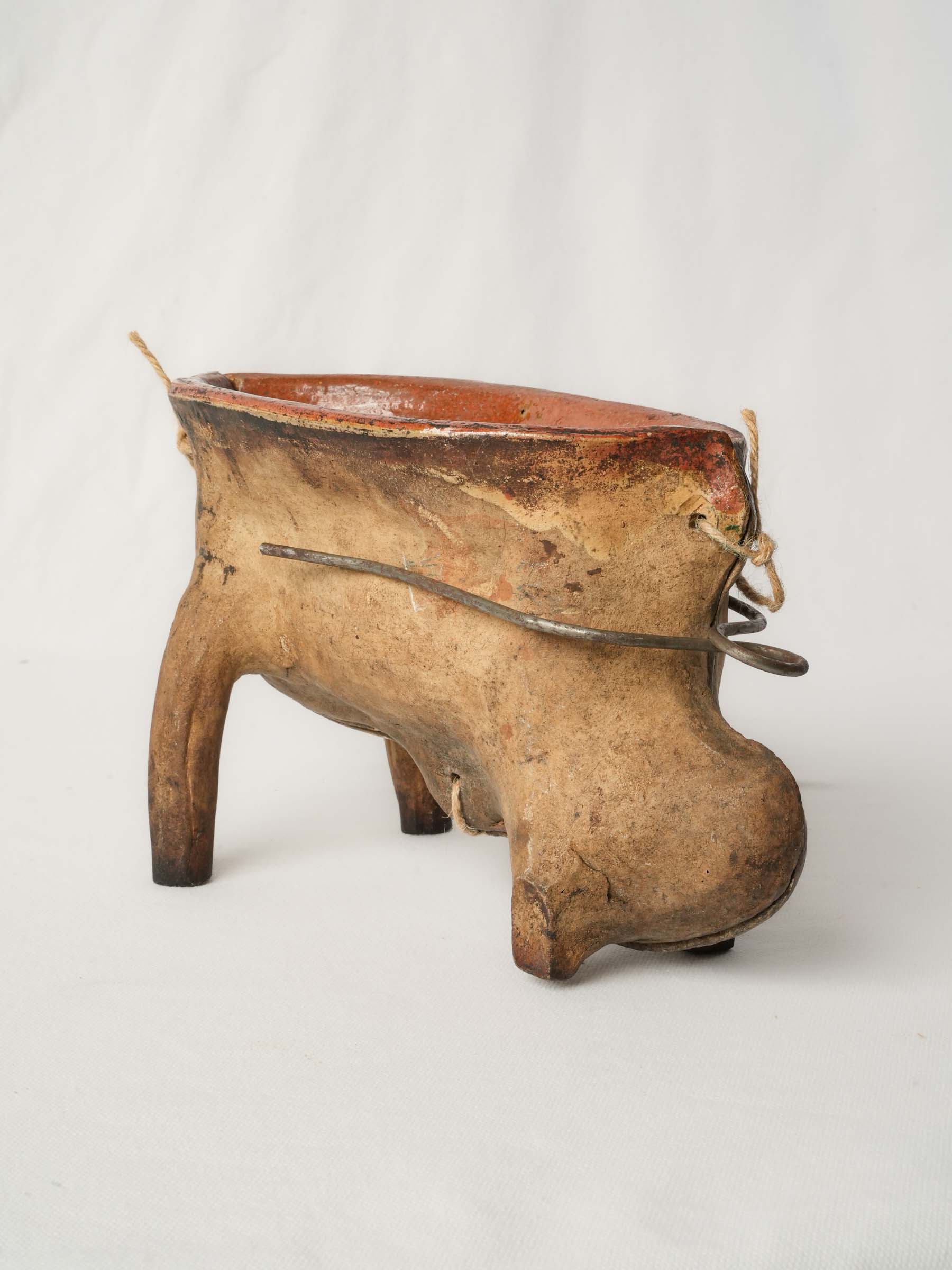
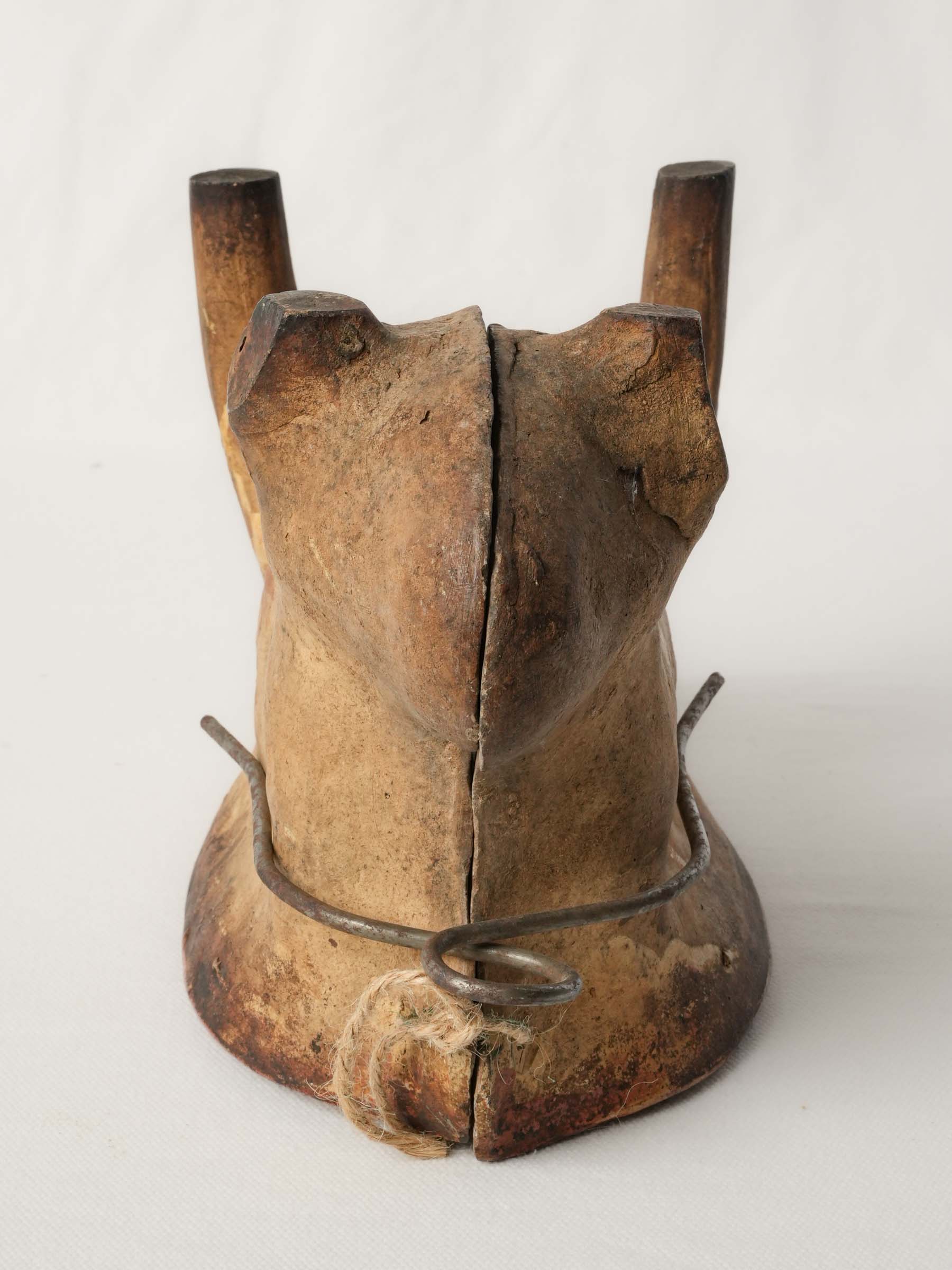
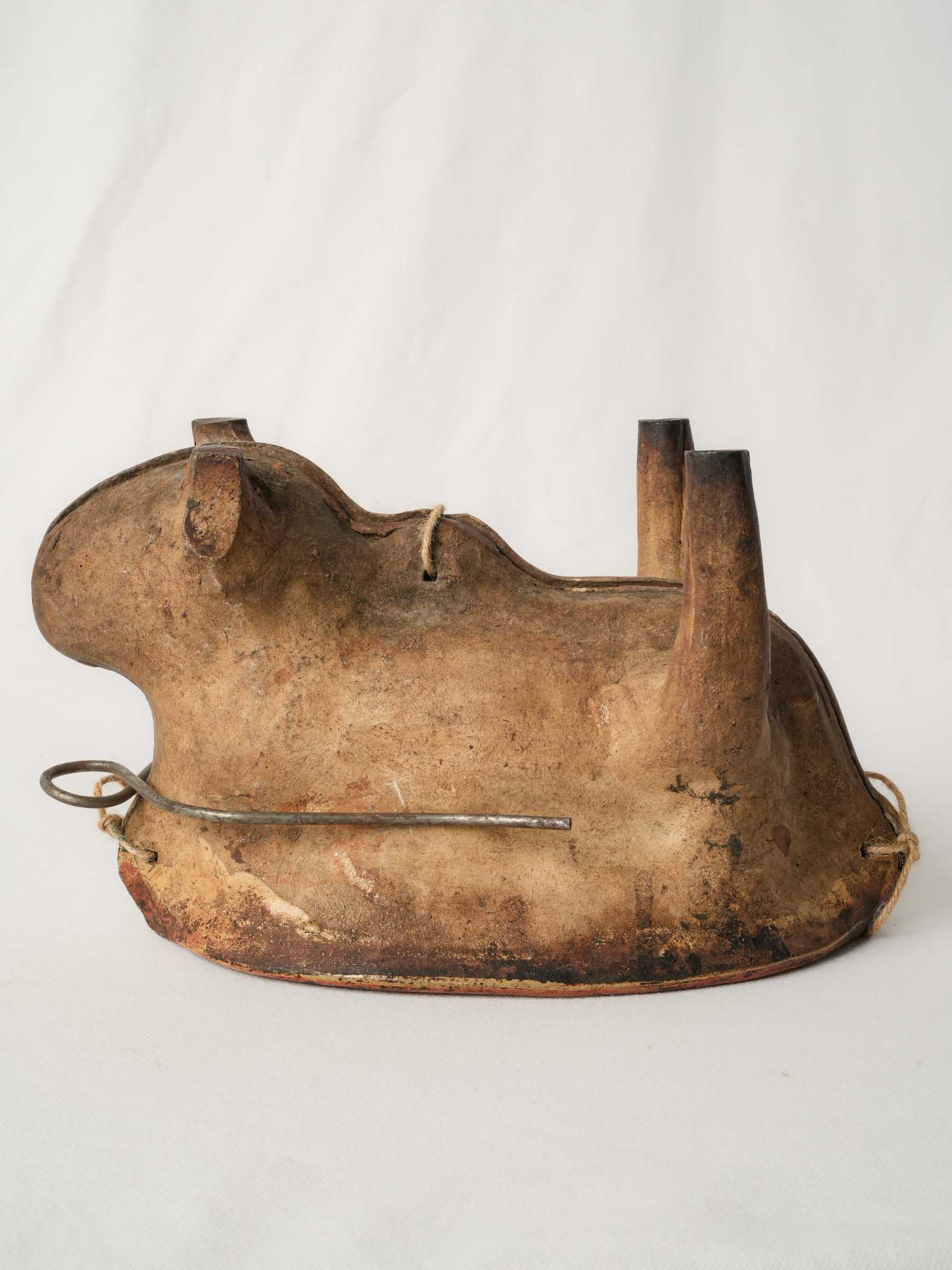
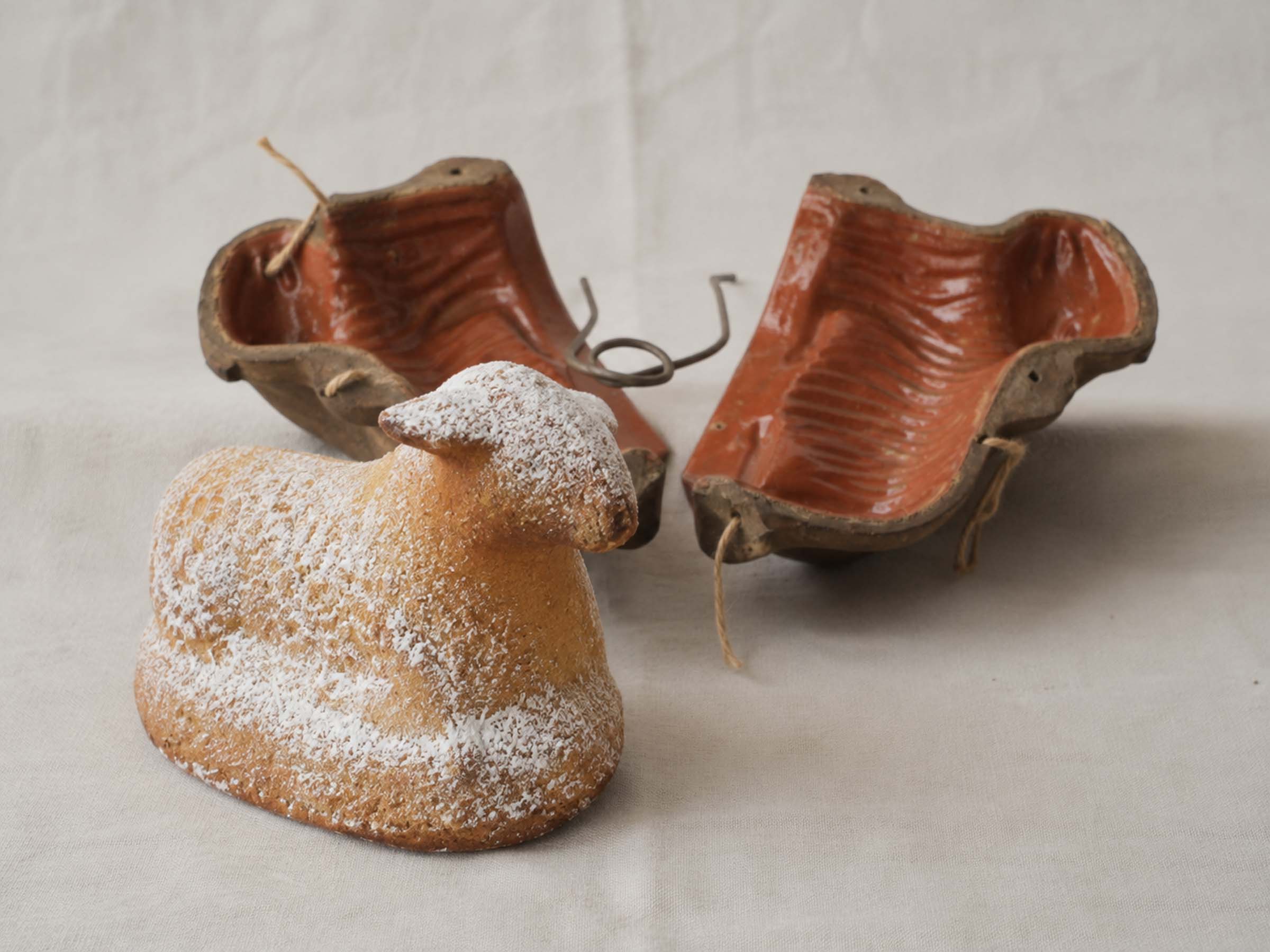
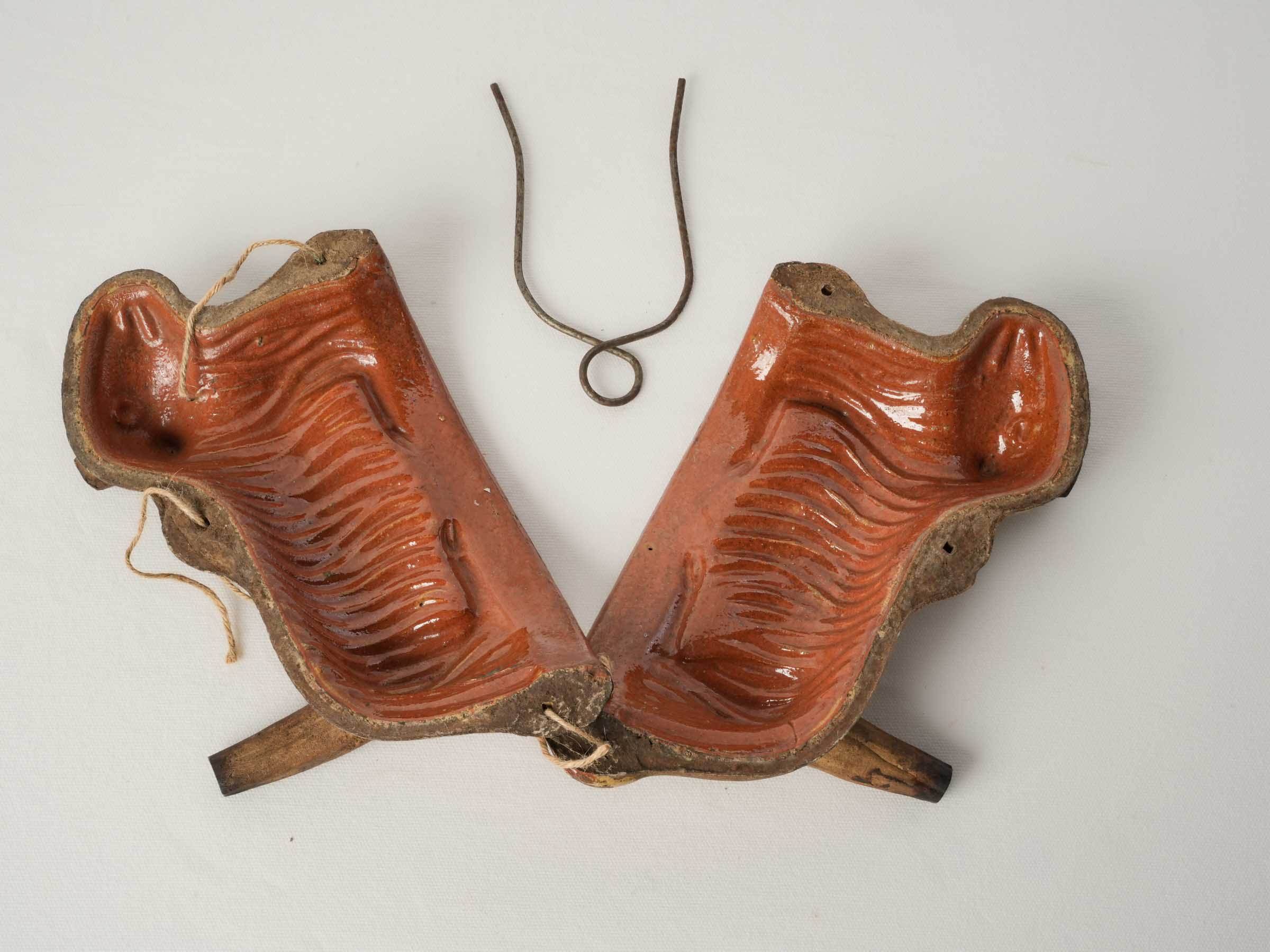
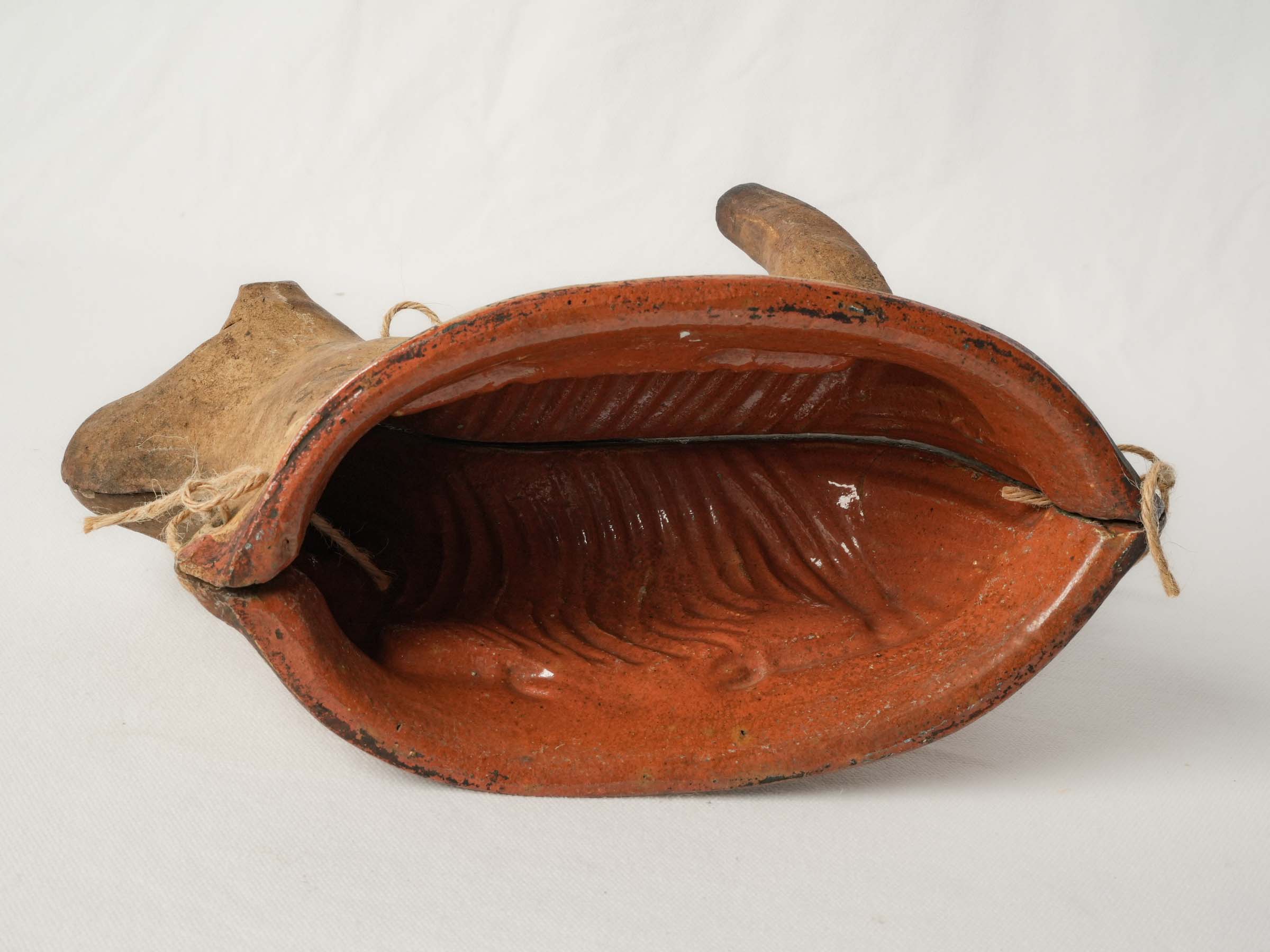
A wonderfully rustic Alsatian two-part “Easter lamb” cake mold, dating from the late 19th or early 20th century, made from terracotta and held together with a metal clip. From the exterior, its sculpted form is relatively understated, with the profile of the lamb’s head just discernible, while the warm red-glazed interior reveals the lamb lying with its legs tucked beneath its body, its fleece suggested by deeply modeled ribbed lines. Four projecting supports allow the assembled mold to stand securely upright while filled with batter. The original metal clip used to hold the two halves together during baking is still present. The glazed interior remains in notably good condition, while the unglazed exterior bears darkened areas and traces of fire and use, giving the terracotta a richly aged surface.
Known in Alsace as a Lamala or Lammele, the small lamb-shaped sponge cake is traditionally baked for Easter and served dusted with powdered sugar. Terracotta molds of this type were notably produced in Soufflenheim, a village renowned for its pottery tradition. The batter needed to be light enough to produce the characteristic airy cake, yet sufficiently thick and firm so that it would not seep through the narrow seam between the two halves of the mold. These were held firmly together during baking, traditionally using a thin willow twig threaded through the perforations and tied around the mold. Willow had a practical advantage over wire, as it did not become dangerously hot in the oven and could be untied more easily after baking. This example retains both the characteristic perforations and its metal securing clip, tangible reminders of how these molds were used.
Beyond its decorative appeal, the mold is an evocative piece of Alsatian culinary heritage, closely connected to a regional Easter tradition that continues today. With its well-preserved interior and original securing clip, it could potentially still be used for baking, provided the two halves can be secured tightly enough to contain the batter. Otherwise, it makes a particularly characterful addition to a kitchen among antique culinary objects and traditional pottery.
Condition and patina consistent with age.
Approx. overall 6¾" high x 11¾" long x 5½" wide
Approx. overall 17cm high x 30cm long x 14cm wide
Antique Alsatian Terracotta Easter Lamb Cake Mold, Early 20th Century - 6¾"x 11¾"
Sale priceUS$575
Choose options