

A Provençal Christmas at Home: Noël à la française
Our first Christmas in Provence is a memory I hold close. The plane trees in the village square shimmered with fairy lights, the chapel glowed with a small nativity, and the air smelled of wood smoke, pine, and winter spice. Hugh and I explored the Christmas markets in Vaison-la-Romaine, Avignon, and Aix. Wooden chalets lined the streets, each one tended by artisans with trays of nougat, candied fruit, and steaming cups of vin chaud. The nights were cold, but the lights, the laughter, and the scent of citrus made everything feel warm.

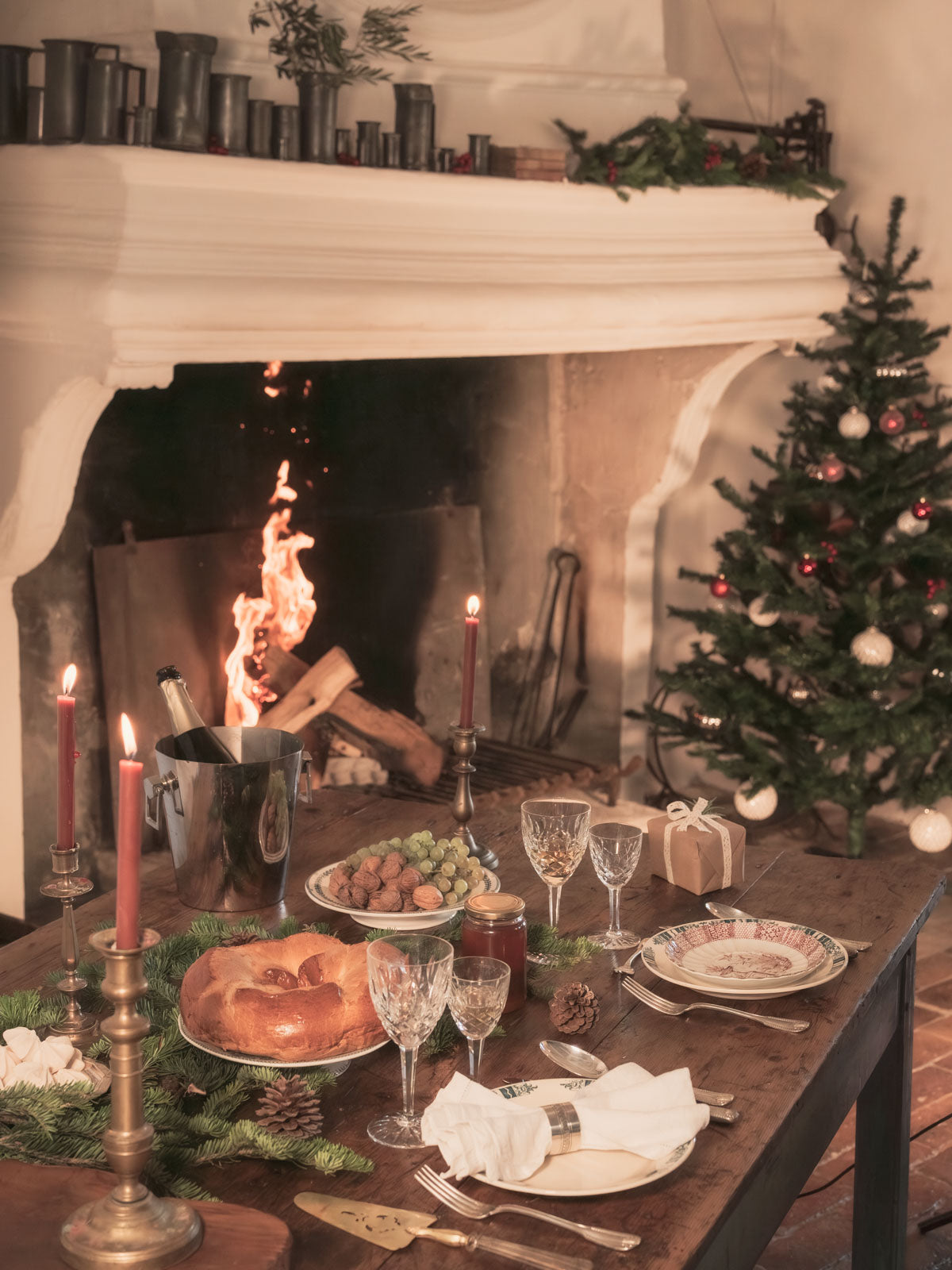
Over time, Christmas in Provence has become a rhythm that begins with familiar rituals: gathering greenery, unwrapping the santons, and setting the table. Decorating with antiques comes naturally here. The old stone walls, the light, and the history in every object seem to ask for it. The table never feels formal or overly styled. What makes it special are the layers of texture, story, and time.


This year, I decided to try something a little different. Instead of the usual arrangement of pine and candles, I filled an antique soup tureen with blushing winter fruit. Pink grapefruit, oranges, lemons, and limes filled the bowl to the brim. The colours felt joyful against the candlelight, and the scent of citrus and pine filled the room. It was such a simple change yet it transformed the table. The fruit seemed to glow from within, bringing a feeling of abundance and freshness that lasted long after dinner. Later, I moved the tureen to the kitchen counter where it continued to perfume the air for days.

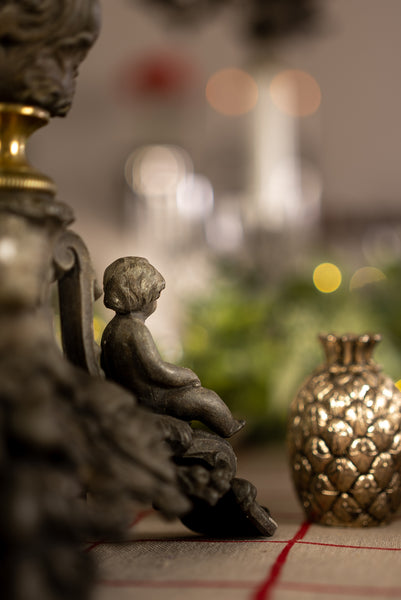
From that centrepiece, the rest of the table decoration grew naturally. I wove olive branches, pine sprigs, and small cones down the length of the table, with fairy lights curling between antique candlesticks. Nestled among the branches were our santons, the small terracotta figures that appear in every Provençal home at Christmas. The word santon comes from santoun, meaning “little saint.” They were first made during the Revolution when churches were closed and families began creating their own nativities at home. Over the centuries, new figures joined the Holy Family, including the baker, the lavender seller, the shepherd, and the fisherman, each one representing village life.

Our own collection has grown year by year. Some have soft, worn colours, others are freshly painted by local artisans. Setting them out feels like greeting old friends. They bring charm and warmth to the table, telling the story of Provence in miniature.


The tableware is a mix of beloved pieces gathered over time. Patterned ironstone plates, antique silver with a soft patina, crystal glasses that catch the light, and linen napkins tied with sprigs of rosemary. Nothing matches perfectly, and that is exactly why it works. The combination feels relaxed, lived-in, and timeless. These pieces are meant to be used, not kept behind glass. Each one carries a memory, a sense of continuity.

Beyond the table, I like to bring a painted marriage chest from our collection into the room. Once symbols of prosperity and love, these chests now seem to belong to Christmas. The faded green and red flowers painted across the front echo the colours of the season. I place it beneath the tree, where its soft tones and aged wood pair beautifully with greenery and lanterns. It anchors the whole scene, a quiet reminder that beauty endures.

Most of the decorations come from nature. Branches of pine and olive, bowls filled with walnuts and pomegranates, and clusters of candles that flicker across the room in the evening. Provence provides all the colour and texture you need, with stone, citrus, wood, and light. The simplest arrangements often feel the most authentic.

And then come the desserts. No Provençal Christmas would be complete without les treize desserts, the thirteen traditional sweets that represent Christ and the apostles. Each one has its meaning. Nougat blanc made with honey and almonds stands for purity. Nougat noir, darker and brittle, recalls life’s hardships. There are figs, almonds, walnuts, and hazelnuts, known as the four mendicant orders. Dried fruits, tangerines, and Calissons d’Aix bring brightness. Often a round brioche crown completes the display, symbolising unity and friendship.

I like to arrange the thirteen desserts on antique platters and compotiers, mixing shapes and textures. Their aged glazes and faded edges bring a gentle rhythm to the table. By the time the candles burn low, the setting feels calm and complete.

What I love most about celebrating Christmas in Provence is how naturally the old and the new fit together. The antiques, the greenery, the fruit, and the santons all blend into something that feels both elegant and alive. Every year we unwrap the same familiar pieces, yet the result is never the same. Provence has taught me that beauty is not found in perfection but in the balance of tradition and spontaneity.
When the lights in the square come on at dusk and the chapel bells echo through the vines, I feel the same quiet joy that I did that first winter. We open a bottle of wine, light the candles, and gather around the table. The silver gleams softly, the fruit glows, and laughter fills the room. Christmas here is not about grandeur. It is about the warmth of sharing a meal, the history that lives in every object, and the comfort of knowing you are home.
Each December brings some new detail to love, a rediscovered antique, a new santon, or the first scent of citrus in the kitchen. Provence has a way of turning these small moments into something lasting. That, for me, is the heart of Christmas here. It is not only decoration or tradition. It is the feeling of belonging, of connection, and of living among things that carry stories worth keeping.

French Christmas Menu: Hearty French country winter fare with delicacies woven in:
Aperitif
The French Christmas dining experience transcends mere indulgence. French Champagne is served with aperitifs featuring fresh black truffles on grilled sliced baguette, homemade foie gras with fig jam and onion confit, thinly sliced charcuterie, and crunchy black radish drizzled with local olive oil and fleur de sel from The Camargue.
Entrée and Main Course
For the entrée, savor a pea and mint soup crafted from snap-frozen spring peas sprinkled with crumbled feta. The main course unfolds with a roasted guinea fowl basted in sparkling white wine, accompanied by roasted winter vegetables and a crisp leafy salad dressed in a classic French vinaigrette. Uncork a Grand Cru from Burgundy to compliment these flavorful dishes.
A classic French cheese board (cheese is eaten before dessert in France)
One of the most pleasurable things to arrange is a classic French cheeseboard – a delightful assortment of artisanal cheeses paired with dried figs, juicy apricots, sweet late harvest muscatels, and roasted almonds. Make sure you take the cheese out of the refrigerator at least four hours before serving to ensure that it is at it’s most gooey and tasty when the time comes! If your guests are timid and don’t want to make the first slice – cut one slice from each cheese – this will encourage people to try everything while also demonstrating how to cut each of the different types of cheeses – there is a rule book!
Here are some traditional cheeses that can be enjoyed at Christmas – serve with either white or red wine (Burgundy is perfect), crusty warmed baguette and grainy crunchy crackers.
Brie: A soft and creamy cheese with a velvety rind, Brie is known for its rich, buttery flavor. It hails from Meaux, in the Île-de-France region and is a staple on French cheeseboards. Remember, if it is not from Meaux, it does not follow the rules of the AOP, so it won’t be as tasty!
Camembert: Another creamy delight, Camembert features a white, bloomy rind and a smooth, gooey interior. This Normandy cheese has a robust and earthy flavor profile. Again, watch out for imitation Camembert and be sure to choose Camembert de Normandie (AOP).
Roquefort: A blue cheese from the South of France, Roquefort is made from sheep's milk. Its distinctive blue veins impart a sharp, tangy taste, making it a pungent and flavorful choice.
Comté: A firm and nutty cheese, Comté is produced in the Jura region. Aged for various periods, it can range from mild and slightly sweet to intensely savory, appealing to a broad range of palates. Choose either a 12- or 18-month Comté – you will taste the difference!
Chèvre (Goat Cheese): France is renowned for its diverse array of goat cheeses. These can vary in texture and flavor, from the crumbly and tangy Bucheron to the creamy and herb-infused Crottin de Chavignol.
Dessert - save room!
Open another bottle of French Champagne to celebrate the grand finale, dessert unveils a Bouche de Noël and the 13 desserts of Provence, a rich assortment encapsulating the spirit of a French Christmas feast.
The "Les Treize Desserts de Noël" or the "Thirteen Desserts of Provence" is a traditional Christmas custom in the Provence region of France. This delightful assortment symbolizes Christ and the Twelve Apostles and is typically served on Christmas Eve. The specific desserts may vary slightly, but the core elements include:
Dates: Representing the fruits of the Holy Land.
Calisson d'Aix: An almond-shaped candy made with almonds and candied fruit.
Pain d'épices: A spiced bread or gingerbread.
Nougat Blanc: A soft white nougat made with almonds and honey.
Nougat Noir: A dark nougat made with nuts and honey.
Quince Paste: A sweet jelly made from quince fruit.
Fruit Candies: Candied fruits like oranges, citron, and melons.
Pompe à l'huile: A festive bread made with olive oil.
Biscotins: Small almond biscuits.
Oreillettes: Fried dough sprinkled with powdered sugar.
Grapes: Symbolizing the Eucharist.
Walnuts and Hazelnuts: Representing humility and the hardships of life.
Raisins: A reminder of the wine enjoyed during the Last Supper.
Sharing these desserts is not only a culinary delight but also a way to come together with family and friends, celebrating the spirit of Christmas in Provence.


For more inspiration on all things French, follow us on Pinterest and Instagram.
Explore our latest products delivered to your door from Provence.
Frequently asked questions
1) What is the traditional French way of decorating the house for Christmas?
Decorating the mantelpiece with forest greens and placing golden baubles and interspersing with pine cones; dressing a Christmas tree with tinsel, ornaments, and lights; creating a beautiful crèche; displaying reliquaries or other Christmas-themed sculptures in the house or on the window ledges, are ways the traditional French home is decorated for Noël. Fill lovely rustic vases and antique ceramic urns with fresh evergreen sprigs and position on tables and benches throughout the residence to evoke a French festive sensibility. For outside, traditional French homes often will have a Christmas wreath mounted on the front door. Courtyards and gardens will be illuminated with candles and lanterns and lovely evergreens or festively-colored elements will adorn chic garden sculptures.
2) My yuletide tablescape needs some updating. What are some ideas I can incorporate for Christmas 2021?
This year, take some inspiration from traditional French tablescapes. Either commit to a neutral color palette with pops of one or two colors - this is very French. Choose for example a natural fibre for the placemats, an evergreen runner, and candlesticks. Consider using a variety of colored and clear glassware on the tabletop. Or if you are feeling like a more busy and lively aesthetic, try a patterned tablecloth, mix and match crockery, and cloth napkins – perhaps with a touch of embroidery. Place Christmas bonbonniere at each table-setting. Fill transparent glass jars with candy canes and other holiday treats.
3) What are some traditional French desserts at Christmas?
Bûche de Noël or Yule log, is ubiquitious with Noël and importantly it most likely originated in France before spreading to many European countries and the rest of the world. Shaped and decorated with chocolate icing and icing sugar to resemble a log of wood dusted in snow, the Yule log is a sponge cake layered with chocolate butter cream. You can go wild decorating it: think red berries, real holly, or use marzipan to mimic forest growth!
The Les Treize Desserts de Noël also is a very traditional French dessert, associated with Provence. Although the items vary village to village and family to family, below is an example of the 13 desserts of Christmas (the first four are a mix of dried fruit and nuts and linked to the monastic orders):
1. Raisins (Dominicans)
2. Walnuts or hazelnuts (Augustinians)
3. Dried figs (Franciscans)
4. Almonds (Carmelites)
5. Tangerines (yes, fresh fruit! If you don't have Tangerines, apples or another fresh fruit will do)
6. Biscotins (biscuits) from Aix
7. Two kinds of nougat (often from Montelimar, a town famous for its nougat)
- Nougat noir au miel (black nougat with honey, a hard candy made with honey and almonds)
- Nougat blanc (white nougat, a soft candy made with sugar, eggs, pistachios, honey, and almonds)
8. Pain d'epices (or spiced bread)
9. Fried bugnes (or angel wings)
10. Oreillettes(light thin waffles)
11. Calissons d'Aix (a marzipan-like candy made from almond paste and candied melon)
12. Casse-dents of Allauch (biscuit)
13. Cumin and fennel seed biscuits
4) For the friend who has everything, how can I find a present they will love?!
- For your green-thumbed friends consider a weathered planter or cachepot
- Candlesticks could make a special present for someone who loves meditative spaces and they can be used year-round
- Cheer wine appreciators with a champagne bucket, stemware, or bar accessory
- A classic set of linen tea towels or an old pot for displaying utensils on the counter will enrapture the home chef and help achieve mise en place in the kitchen
Related Posts:
20 Gift ideas for Francophiles

Christmas in France: Île-de-France, Alsace, Aquitaine, Rhone Alps, the Riviera, and Corsica

Seven ways to decorate with demijohn bottles


Leave a comment
This site is protected by hCaptcha and the hCaptcha Privacy Policy and Terms of Service apply.